









How to Play Horror Metro Anomaly: Subway Escape | Beginner's Guide-Horror Metro Anomaly: Subway Escape
Similar Games







































Game Controls and Navigation
Mastering the controls is the first step to surviving the shifting subway tunnels. Horror Metro Anomaly: Subway Escape utilizes standard first-person browser game controls, ensuring a familiar and intuitive experience for players.
Movement and Camera
- WASD or Arrow Keys: Move your character forward, backward, left, and right through the subway corridors.
- Mouse Movement: Look around to scan the environment. Turning your head is crucial for spotting hidden clues, shifting walls, and exit signs.
- Shift Key: Sprint or move faster when navigating open tunnels (use with caution, as it may alert hidden anomalies).
Interaction and Investigation
- Left Click / E Key: Interact with the environment. Use this to examine numbered markers, read graffiti, open doors, and manipulate subway mechanisms.
- Right Click: In some areas, right-clicking may allow you to inspect objects more closely or access contextual menus.
Environmental Awareness
Because the tunnels shift, your camera and movement controls must be used to constantly reassess your surroundings. The game does not provide a traditional minimap; instead, you must rely on your spatial awareness and the visual landmarks in the subway station to orient yourself.
Understanding the Shifting Tunnel Mechanics
The defining feature of Horror Metro Anomaly: Subway Escape is the shifting tunnel system. Unlike static maze games, the subway layout actively changes, creating a dynamic and unpredictable environment. Understanding how and why the tunnels shift is essential for your survival.
How the Tunnels Shift
The shifting mechanics are tied to the game's reality-bending narrative. As you progress through the loops, the physical architecture of the subway station alters. Walls may extend, corridors may loop back on themselves, and previously open paths may become blocked. These shifts are not random; they are often triggered by your actions, your position in the loop, or the passage of "time" within the game's reality.
Observing the Changes
To navigate the shifting tunnels successfully, you must become an active observer. Look for subtle changes in the environment:
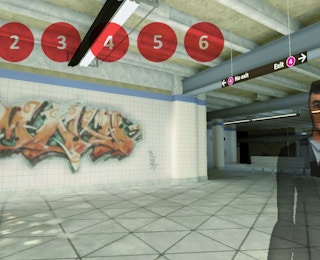
- Graffiti and Wall Textures: The placement and content of subway graffiti may change or reveal new messages between loops.
- Numbered Markers: The red numbered circles (e.g., 2, 3, 4, 5, 6) serve as fixed points of reference. Track their relative positions to detect when the tunnel layout has shifted.
- Lighting and Exit Signs: The illumination of the station and the direction of the exit signs can indicate which path is currently valid and which is a trap.
By memorizing these visual anchors, you can quickly identify when a shift has occurred and adjust your route accordingly. Do not rely on muscle memory from previous attempts; always re-evaluate your surroundings.
Beginner Tips for Surviving the Reality Loops
Facing 7+ reality-bending loops can be overwhelming, especially for players new to the horror escape genre. Here are essential tips to help beginners navigate the subway system and avoid getting trapped in endless cycles.
1. Slow Down and Observe
It is easy to panic and run blindly when the tunnels start shifting. Resist the urge to sprint. Take a moment to look around, note the current layout, and identify your starting point. Rushing often leads to missing crucial clues hidden in the subway environment.
2. Use the Numbered Markers as Anchors
The red numbered circles in the subway station are your best friends. In the first loop, memorize the sequence and location of these numbers. When the environment shifts in the second loop, use these numbers to determine exactly how the layout has changed. This simple tracking method can save you from getting lost in the shifting corridors.
3. Document Your Progress
If the game allows, take notes on the puzzles you have solved and the paths you have taken. Even a simple sketch of the subway layout from memory can be invaluable when you are forced to restart a loop. Track which doors were open, which graffiti appeared, and where the exit sign was pointing.
4. Manage Your Sanity (Metaphorically)
The game is designed to induce psychological stress. If you feel frustrated or overwhelmed, take a real-world break. The shifting tunnels and reality loops are meant to be disorienting, but taking a step back allows you to return with a clearer mind and better problem-solving skills.
5. Focus on the Exit, Not the Horror
While the horror elements are immersive, your primary goal is to escape. Do not get distracted by exploring every dark corner or reading every piece of graffiti unless it provides a navigational clue. Keep your eyes on the exit signs and the numbered markers to ensure steady progress through the loops.