










How to Play Survival Showdown: Huggy Wuggy Squid Game 3D-Survival Showdown: Huggy Wuggy Squid Game 3D
Similar Games
















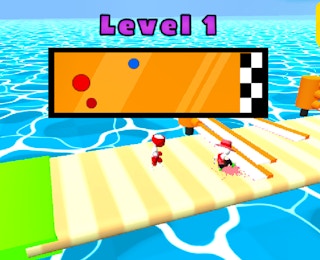

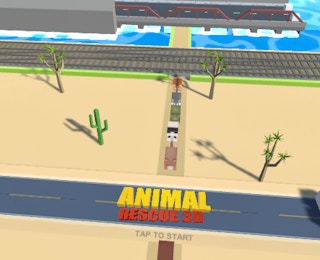

Basic Starting Steps
- Open the browser version of Survival Showdown: Huggy Wuggy Squid Game 3D through the provided online page.
- Wait for the opening screen to load and look for any start, movement, or objective prompts.
- Begin the run and focus on staying alive rather than moving quickly.
- When a challenge begins, identify the immediate threat and move away from it with controlled input.
- If you are eliminated, note what caused the failure before restarting.
The listing does not provide a full rulebook, but the central instruction is clear: dodge or die. That means every round should be treated as a survival test where one mistake may end the attempt. Your first goal is not to clear everything perfectly. It is to survive long enough to understand how threats are introduced and how your character responds.
First-session goals
- Learn what causes elimination.
- Learn how your character starts, stops, and turns.
- Notice whether threats approach you, appear suddenly, or follow a repeatable rhythm.
- Finish each attempt with one clear lesson.
Because the game promotes surviving 10+ rounds, expect repeated challenge cycles. Play your first few sessions as information-gathering sessions. Watch how threats appear, how much space you have, and whether your mistakes come from rushing, hesitation, or misreading movement.
Known Rules and Expectations
| Element | What the Game Information Indicates |
|---|---|
| Objective | Survive deadly challenges as long as possible. |
| Round count | The listing promotes 10+ heart-pounding rounds. |
| Failure state | The phrase Dodge or Die implies that being caught can end the attempt. |
| Player focus | Mastering challenges through dodging, timing, and adaptation. |
| Access | Free online play with unlimited access according to the description. |
The exact conditions for winning, losing, or advancing are not fully detailed in the provided information. However, the survival category and the description strongly suggest that progression is based on lasting through consecutive challenges. Treat anything that touches or catches you as potentially fatal until you learn otherwise.
A useful rule of thumb is to prioritize clean survival over risky movement. If a round offers multiple possible positions or routes, choose the one that leaves you enough time to react. If the game later reveals safer patterns, you can increase speed after those patterns are confirmed.
Since the description emphasizes unlimited access, you can repeat attempts without the listing suggesting locked levels or paid entry. Use that structure to practice specific moments, such as the first few seconds of a challenge, rather than only trying to complete a full run.
Control Information
The provided game information does not list a specific control scheme for Survival Showdown: Huggy Wuggy Squid Game 3D. Because it is presented as an online browser game, the most reliable approach is to start the game and check any on-screen instructions before moving into a high-pressure round.
When you first load the game, look for clues about movement, camera behavior, jumping, dashing, or restarting. If no control hints appear, make small test movements first. This helps you learn the character speed and turning response without committing to a large dodge that could put you into danger.
Control habits to use
- Use short, deliberate inputs instead of holding a movement key in panic.
- Test one direction at a time until you understand how quickly your character responds.
- Avoid frantic repeated direction changes unless the threat clearly demands them.
- If the game shows a restart or retry option, use it to practice the opening moments.
Control discipline is often as important as knowing the arena. In a dodge-focused survival game, many deaths come from overreaction rather than lack of information. Keep your hands relaxed, watch the threat, and make only the movement needed to stay safe.
How a Run Usually Feels
The gameplay loop suggested by the listing is a series of survival challenges. You enter a round, react to a deadly threat, and try to remain alive long enough to move forward. Since the game promotes more than 10 rounds, a successful run is likely about consistency rather than one perfect reaction.
Early rounds
Use early rounds to observe. Identify where threats originate and whether they move toward you, block movement, or punish slow reactions. Do not try aggressive optimization before you understand the basic timing.
Middle rounds
Once you recognize patterns, begin tightening your movement. Keep a small margin of safety. If a challenge has a rhythm, wait for the rhythm to become clear instead of guessing. Your goal is to convert what you learned in early rounds into repeatable dodges.
Late rounds
In later rounds, mistakes are more costly because you have more progress to lose. Slow down mentally even if the game feels faster. Focus on clean dodges, stable positioning, and avoiding panic inputs.
After each elimination
The best way to improve is to treat every elimination as data. Ask what triggered the failure: Did you move too late? Did you move into a worse position? Did you misread the threat? That simple review loop turns random deaths into practical improvements.
If you find yourself losing at the same point repeatedly, stop trying to force the same response. Change one variable at a time, such as starting movement earlier, moving shorter distances, or waiting one beat before reacting.